Cheap supermarkets in Shanghai aren’t always obvious. Grocery prices can vary a lot depending on where you shop, and it’s easy to pay 2–3x more for the same item.
If you’re trying to keep costs down, the key isn’t just finding the cheapest supermarket. It’s knowing what to buy where.
This is a strategy guide rather than a directory. Most of these supermarkets have multiple locations across Shanghai. Use the Shanghai Supermarket Store Finder to find locations near you.
The Short Answer
- Use local Chinese supermarkets for everyday basics
- Use wet markets for fresh produce (often the cheapest of all)
- Use imported supermarkets selectively
- Mix and match rather than relying on one place
The Cheapest Options (For Everyday Shopping)
If you just want consistently low prices, start here:
- RT-Mart (大润发)
- Century Mart (世纪联华)
- Lianhua (联华)
These are large, local chains with lower prices across the board. Selection is more local, but perfectly fine for day-to-day cooking.
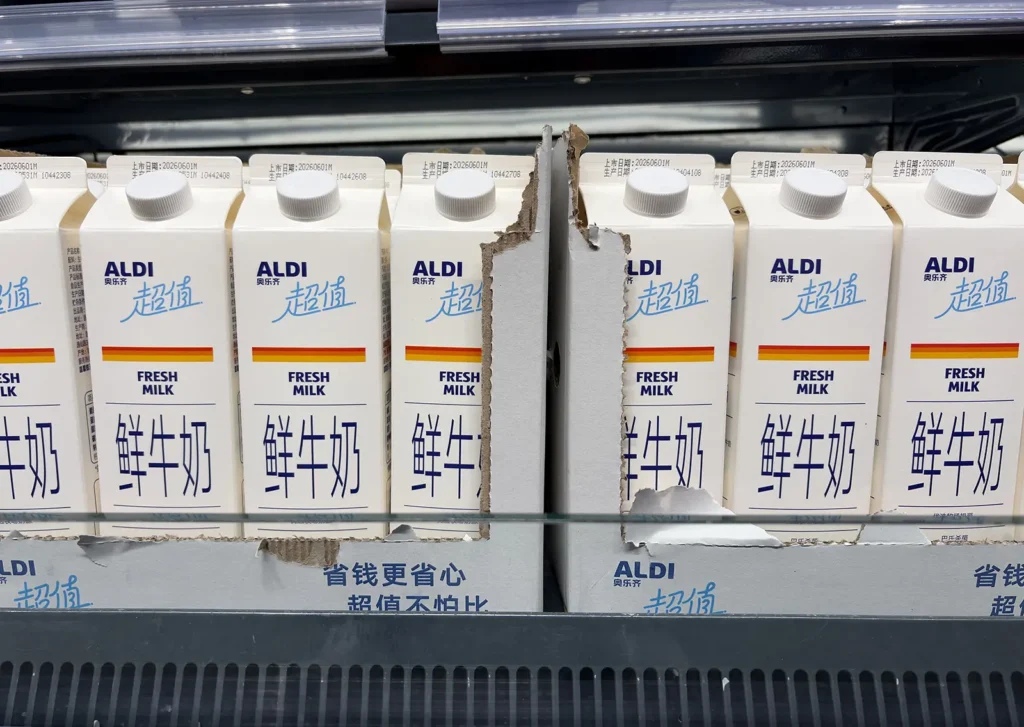
Aldi is also worth mentioning here. It’s small and not everywhere, but where it exists it can be one of the better value options. In China, Aldi focuses on its own-label products with a limited range of branded items, which helps keep prices down. It’s a good place to pick up imported-style products at lower prices, as long as you’re comfortable going with lesser-known or own-brand options.
Mid-Range: Good Value If You’re Selective
Places like Hema (盒马) sit in the middle.
- Good quality
- Very convenient (especially with delivery)
- Prices vary a lot depending on the product
- Both local and certain imported items available
Use it strategically:
- good for meat and seafood
- less good for fruit and imported items
Premium Supermarkets (Know When to Use Them)
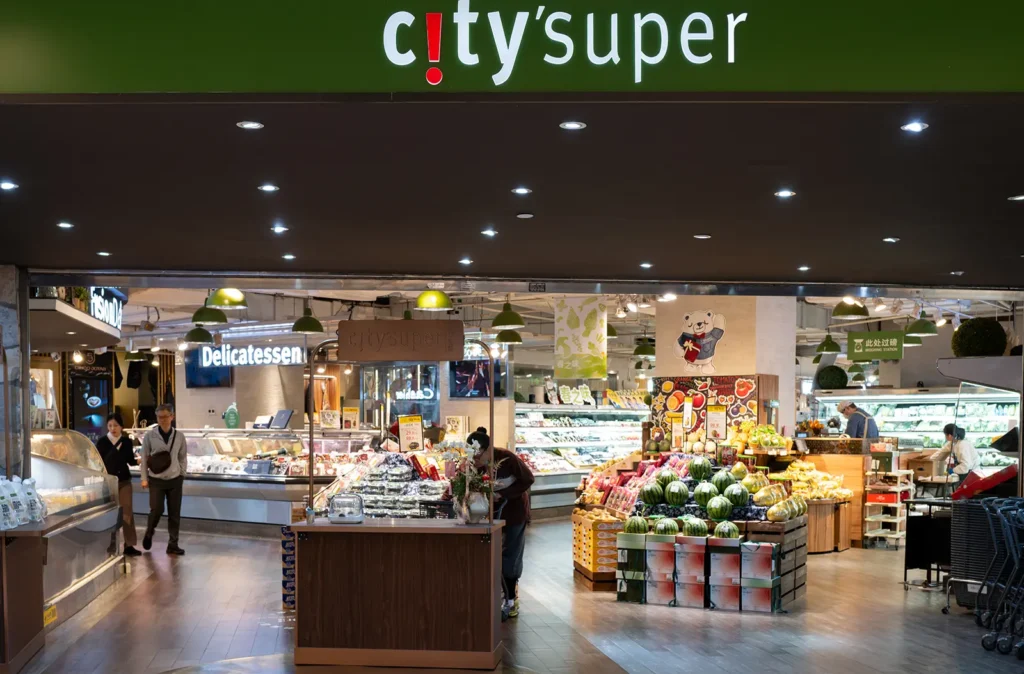
These are great supermarkets, just not for budget shopping:
- City’Super (found in high end malls such as IAPM and IFC)
- Ole’ (found in malls like Kerry Center Jing’an and The Place, Gubei)
- Times Grocery (basement level, Shanghai Center)
- Takashimaya (basement food hall)
- Freshmart (basement of Jiu Guang department store, Jing’an Temple)
These are where you’ll find the best range of imported food, but they’re not designed for budget shopping.
They’re also often located in central, high-end areas like Jing’an, Xintiandi and major malls, which makes them convenient for visitors but expensive for everyday use.
If you’re looking for more detail on locations and what each one is good for, see our full supermarkets guide.
A Useful Middle Ground: Avocado Lady
Avocado Lady is a Shanghai expat institution. What started as a single woman selling avocados from a basket has grown into a small shop in the former French Concession stocking an impressive range of imported products — cheeses, deli meats, condiments, snacks, cereals and more.
Prices are noticeably lower than CitySuper or Ole for many items, making it the go-to for expats who want imported food without the premium supermarket markup.
Where to Find These Supermarkets
Finding the right supermarket depends on what you need and where you are in the city.
Budget chains (RT-Mart, Century Mart, Lianhua) are spread across residential districts citywide. They’re not always in obvious tourist areas, so use Dianping to find your nearest branch.
Hema is best accessed via its app, which shows your nearest store and whether you’re within delivery range. There are physical stores around the city but the app is the main draw.
City’Super has branches in IAPM mall (Huaihai Road), IFC (Lujiazui) and Plaza 66 (Jing’an). Ole’ is in Kerry Center (Jing’an) and Grand Gateway (Xujiahui). Both are in high-end malls so easy to find but expensive to park near.
Avocado Lady is at 274 Wulumuqi Road in Xuhui district.
For everything else, use the Shanghai Supermarket Store Finder to find supermarkets and hypermarkets near you.
The Real Secret: Wet Markets
If you want the cheapest fresh food in Shanghai, this is it.
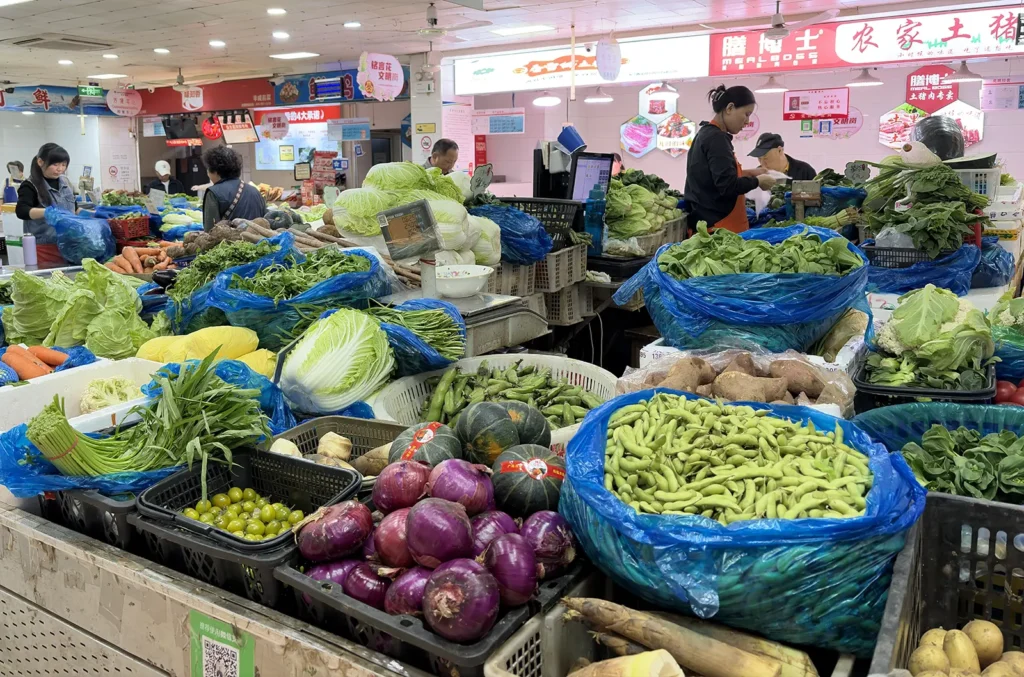
Wet markets are usually:
- cheaper than supermarkets
- fresher for fruit, vegetables, and meat
- more flexible (you can buy small quantities easily)
It’s not as polished as a supermarket, but for everyday cooking, it’s hard to beat on price.
See our full guide to wet markets in Shanghai
Simple Strategy That Works
If you want to keep things simple:
- Vegetables & fruit: wet market
- Meat & seafood: Hema or local supermarket
- Dry goods (rice, noodles, sauces): local supermarket
- Imported food: only when needed, from premium stores
This alone can cut your grocery bill noticeably.
Where Tourists Usually Overpay
If you’re staying in central areas like Jing’an or near Nanjing Road, it’s easy to default to the nearest premium supermarket.
They’re convenient, but even simple items like fruit, eggs and bottled water can be noticeably more expensive.
Walking a few minutes to a local supermarket or wet market can make a big difference.
Extra Tips to Save Money
- Go later in the day at wet markets, some vendors discount remaining stock
- Avoid imported versions of products where local alternatives exist
- Compare nearby options, prices vary more than you’d expect
- Use apps like Dianping or Hema to compare options nearby without having to visit in person
Related Supermarket Guides
- Supermarket Store Finder
- Best Supermarkets in Shanghai
- Hypermarkets in Shanghai
- Imported Food in Shanghai
- Wet Markets in Shanghai
- Shanghai Supermarkets Guide
Final Thought
There isn’t one perfect answer for cheap supermarkets in Shanghai. The best approach is to mix and match.
Once you get used to it, you’ll quickly spot where to buy each item and avoid overpaying.