
Visiting Shanghai can feel overwhelming at first. Payments work differently, many Western apps are blocked, and even maps and taxis can confuse first-time visitors. This guide covers the practical things you actually need to know before arriving in Shanghai, from Alipay and transport apps to VPNs, metro tips and avoiding common mistakes.
Planning your first trip to Shanghai?
Our Shanghai 2-day itinerary takes the guesswork out of where to go and what to see.
Alipay and WeChat Apps
This is probably the biggest adjustment for first-time visitors to China. Setting these apps up before you arrive will make paying for things, navigating the city and communicating much easier.
Facebook and WhatsApp are both blocked in China, so WeChat makes it a lot easier to message people in China and is the universal method of messaging for China residents. If you are roaming, using a foreign SIM card, you will be able to use WhatsApp and Facebook, but it will not work if you are connected to local Wifi and roaming can get expensive. A secondary use of WeChat is as a form of payment. Although Alipay is more of a payment app, some places only accept WeChat and not Alipay, so it is helpful if you are able to link a payment card to WeChat pay. It is also useful for sending payments to locals, for instance if you are sharing the cost of a meal at a restaurant.
Alipay is primarily a payment platform and if you are able to connect your bank card to Alipay, it will make things much easier when trying to pay for things in shops and restaurants. For what it’s worth, I did manage to connect my UK debit card to Alipay and it does work, but there is a 3% fee for all transactions over 200 RMB, so be aware of that.
There is a kiosk in the arrivals hall of Pudong airport where staff will assist you if you have problems installing Alipay, although I am not sure how helpful they can be.
VPN & eSIMs
Access to sites like Google, Instagram, YouTube, and WhatsApp is restricted in China, so you’ll need a workaround. The two main options are using a VPN or an overseas eSIM.
A VPN allows you to access blocked websites by routing your connection through another country. Astrill is one of the most popular and reliable options among expats, and they offer monthly plans if you’re just visiting. I’ve been using Astrill for many years.
If you plan to use a VPN, make sure you set it up before you arrive in China. Most VPN provider websites are blocked once you’re in the country, so it can be difficult to install one after you arrive.
An alternative is to use an overseas eSIM, which often routes data outside China and allows access to blocked sites without needing a separate VPN. This is usually the easiest option for short trips. You can read more in my eSIM guide.
In the interest of full disclosure, the Astrill link above is an affiliate link. If you subscribe through it, I may receive a small commission at no extra cost to you.
Sorting your data before you fly?
Our best eSIM for China guide covers the top options for staying connected without a local SIM.
Getting Around Shanghai
Subway
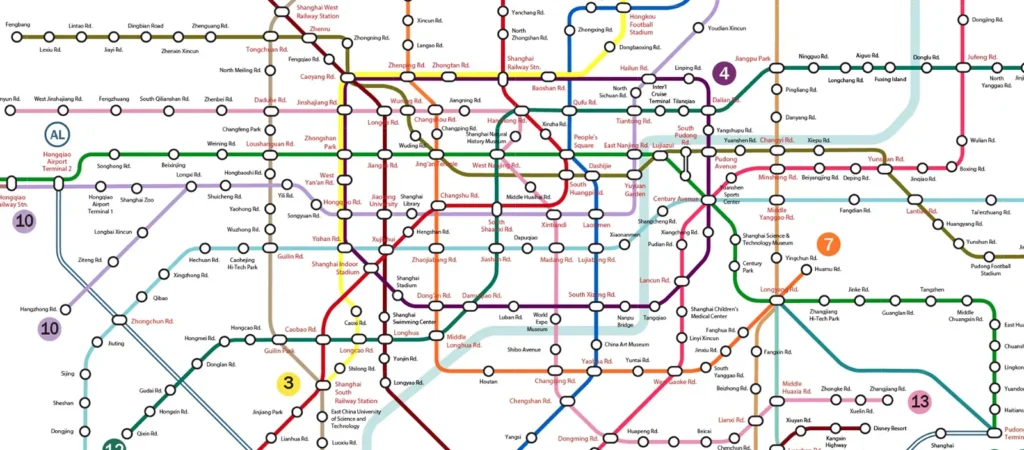
Shanghai’s subway has expanded rapidly from just 2 lines in 1999 to 18 lines today, plus a link connecting Hongqiao and Pudong airports. It’s an efficient, affordable way to get around the city. Short trips cost just 3 RMB and longer trips up to 8 RMB.
The Explore Shanghai app is a great tool for navigating the system, offering routes, trip times, and fares in English.
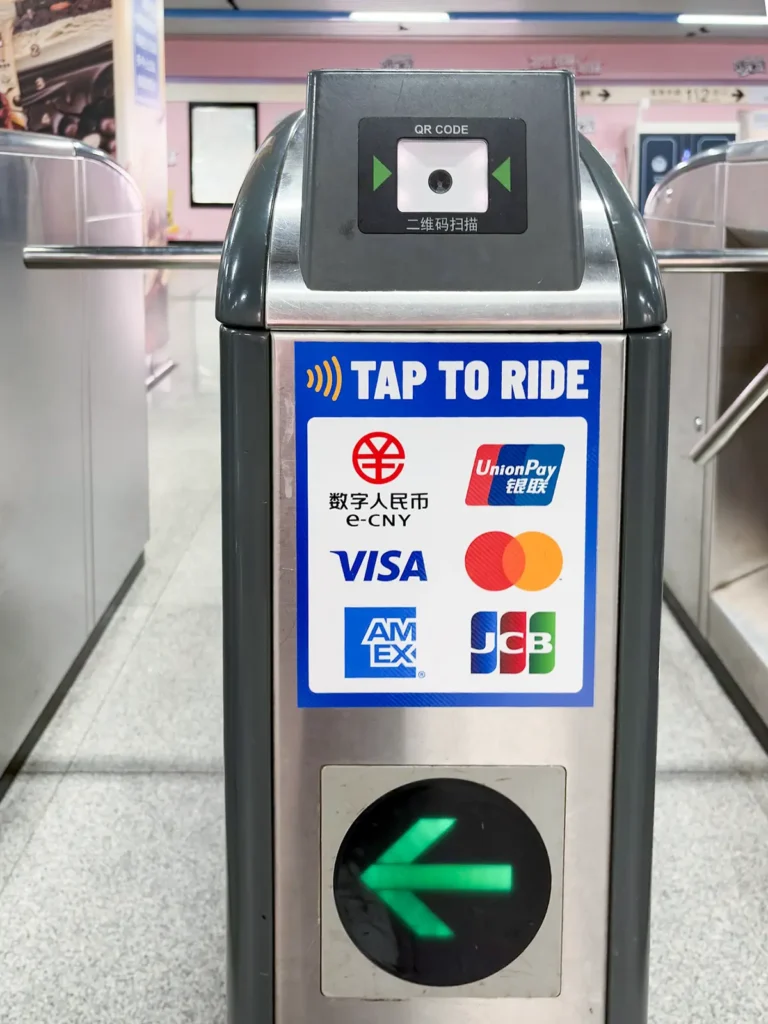
Tickets can be purchased at machines using cash, via a travel card, or on Apple Wallet for iPhone users. Many Shanghai metro stations now accept major credit cards, e-CNY, and UnionPay at the turnstiles, making it easier for tourists and expats to travel without cash.
The main drawback is crowding at peak times, but otherwise, it’s a fast and reliable option. Lines 1, 7, and 10 serve the former French Concession, making it easy to reach from most areas of the city.
If you need help asking for directions, see our Chinese phrases guide.
Didi
Hailing a taxi on the street is increasingly difficult because most people now use ride-hailing apps. The most widely used service in China is DiDi (similar to Uber), and if you only download one ride-hailing app, it should be Didi. The app has an English interface which can be selected in the settings. For a broader overview of mobile services used across the country, see our guide to essential apps for visiting China.
You can use Didi to book regular taxis as well as private cars ranging from small economy vehicles to larger six- or seven-seat cars if you are travelling with a group or have a lot of luggage. Prices are generally reasonable. A typical ride within central Shanghai often costs under RMB 20, while airport transfers usually cost around RMB 130–250, depending on traffic, distance and the type of car.
Transfers from Shanghai Hongqiao Airport are usually cheaper because it is closer to the city centre, while rides from Shanghai Pudong Airport tend to cost more.
If you want to compare the two in more detail, see our subway vs taxi in Shanghai guide.
Hiring a Car in China
While most visitors rely on the metro or Didi, renting a car can be a great option if you’re planning to explore beyond Shanghai. Foreign visitors can obtain a temporary driving licence in China without taking a driving test. Read my step-by-step guide covering the required documents, licence translation and application process.
Shared Bikes
There are several companies offering shared bikes all over the city and they are very easy to find and use. Unlike some countries, you can just leave the bikes anywhere and do not need to return them to specific stations. You will need to download the Meituan app or use Alipay to scan the QR codes on the bikes in order to use them. Costs are very affordable and depend on the amount of time your journey takes. Shared bikes are great for those journeys that perhaps are too short to take a Didi, but too far to walk.
Maps
Google Maps does not work well in China even if you have a VPN. There is usually an offset, which will mean you are never where the map says you are. This isn’t accidental, it’s deliberate. If you want a more technical explanation, most of the world uses WGS-84 and this is what GPS uses. But in China, they use a different, Chinese coordinate system called GCJ-02. It is based on WGS-84 but uses an algorithm to add random latitude and longtitude offsets as a security measure. Any mapping service needs to have approval from the State Bureau of Surveying and Mapping to use GCJ-02.
Apple Maps works fine if you have an Apple device, otherwise Baidu Maps works well but is only in Chinese. Another option, perhaps the best option, is Amap, know as Gaode map in Chinese (高德地图), which does also have an English option and seems to work well.
Getting from Shanghai Airports to the City
Shanghai has two major airports: Pudong International Airport (PVG) and Hongqiao International Airport (SHA). Pudong handles most long-haul international flights, while Hongqiao mainly serves domestic and regional routes within Asia.
Pudong Airport (PVG)
Located around 30 km east of the city centre, Pudong Airport is connected to Shanghai by Metro Line 2, airport buses, taxis/Didi and the high-speed Maglev train. Journeys into central Shanghai usually take around 40–60 minutes depending on traffic and transport choice.
Hongqiao Airport (SHA)
Hongqiao Airport is much closer to central Shanghai and is directly connected to the metro system and Hongqiao Railway Station. Travel times into downtown Shanghai are usually around 20–40 minutes.
Looking for detailed transport advice, late-night arrival tips and airport transfer comparisons? See our full guide to getting from Shanghai airports to the city. If you have several hours between flights, we also have a practical Shanghai layover itinerary covering what you can realistically see during a short visit into the city.
Metro or taxi?
Not sure which to use and when? Our Subway vs Taxi guide breaks it down.
Hotels
Most visitors will need a hotel, whether for a short stay or while finding longer-term accommodation. Shanghai has options for all budgets, from affordable local chains to international five-star brands.
Where you stay makes a big difference to your experience, especially in terms of convenience and travel time. For most visitors, it’s best to stay in a central area.
For a full guide on where to stay, including recommended areas and hotels, see our Where to Stay in Shanghai guide.
Where to stay (quick overview)
- The Bund / People’s Square – Best for first-time visitors and easy access to major sights
- Jing’an – A good mix of local life, restaurants, and convenience
- Lujiazui (Pudong) – Great views and modern hotels, but less central for sightseeing
Example hotels
Crowne Plaza Nanjing Road
Very central location near People’s Square and Nanjing Road, within walking distance of the Bund.
Mandarin Oriental Pudong
High-end option with great views, located in Lujiazui.
Where should you stay in Shanghai?
Our Where to Stay in Shanghai guide covers the best areas and hotels for every budget.
Weather in Shanghai
Shanghai has four distinct seasons, with extremely hot, humid summers (up to 40°C / 104°F) and cold, damp winters with temperatures hovering around freezing. Weather can have a big impact on your trip, so planning ahead makes a real difference.
Seasonal Overview
Spring (March–May)
Mild and generally pleasant, with occasional rain. A good time to visit before the summer heat arrives.
Summer (June–August)
Hot, humid, and often rainy, with occasional typhoons. Sightseeing can be tiring, especially during the day.
Autumn (September–November)
This is the best time to visit Shanghai and ideal for outdoor sightseeing, including places like Shanghai Disneyland.
Winter (December–February)
Cold and damp, and often feels colder than the temperature suggests. Snow is rare.
In addition to weather, it’s also helpful to know when the Chinese public holidays fall to avoid the most crowded times.
Best time to visit
Autumn is the best time to visit Shanghai, especially September and October when temperatures are usually in the mid-20s Celsius (77°F). However, the early October national holiday can significantly affect crowds, travel, and prices, so it’s worth checking the dates before planning your trip.
How weather affects your trip
- Skyline views depend heavily on visibility, especially from places like the Shanghai Tower and the Bund
- Summer heat and humidity can make walking between attractions exhausting
- Rain can disrupt outdoor plans and sightseeing
- Winter often feels colder than expected due to damp conditions
Booking your trip?
For hotels, high-speed train tickets, attraction tickets and airport transfers, Trip.com is my recommended booking platform for travel in China. It offers English-language support, accepts international credit cards and makes planning your trip straightforward.
Explore Trip.com →China Visa
Most visitors require a visa to enter China, although China now offers visa-free entry or 240-hour transit schemes for some nationalities. These policies change regularly, so always check the latest guidance from the Chinese embassy or consulate before travelling.
Know when you’re going?
Our Things to Do in Shanghai guide covers the best attractions, neighbourhoods and day trips.
Tipping
Tipping is not customary in China and is not required nor expected. In places where tourists are more prevalent, the locals may have become more used to some tourists offering tips and may or may not accept it, but otherwise there will be no expectation of tips and attempt to tip may lead to awkward situations. This may feel strange to those coming from a place where tipping is the norm (eg USA) but those from non tipping countries can act as they do back home.
Currency Exchange
Most visitors won’t need to exchange large amounts of cash, as Shanghai is now heavily mobile-payment based and many places accept international cards through Alipay or WeChat Pay.
If you do need cash, foreign currency can be exchanged for RMB at banks and airports using your passport. Exchange rates between major banks are usually very similar, so there is little need to shop around.
If you exchange foreign currency into RMB, keep the exchange receipts. They make it much easier to convert leftover RMB back into foreign currency later, usually up to the amount originally exchanged.
If you need less common currencies or a large amount of cash, it’s worth contacting the bank branch in advance as they may not have enough notes available on the day.
Explore more:
Things To Do in Shanghai | Layover Itinerary | 2-Day Itinerary | Food & Drink