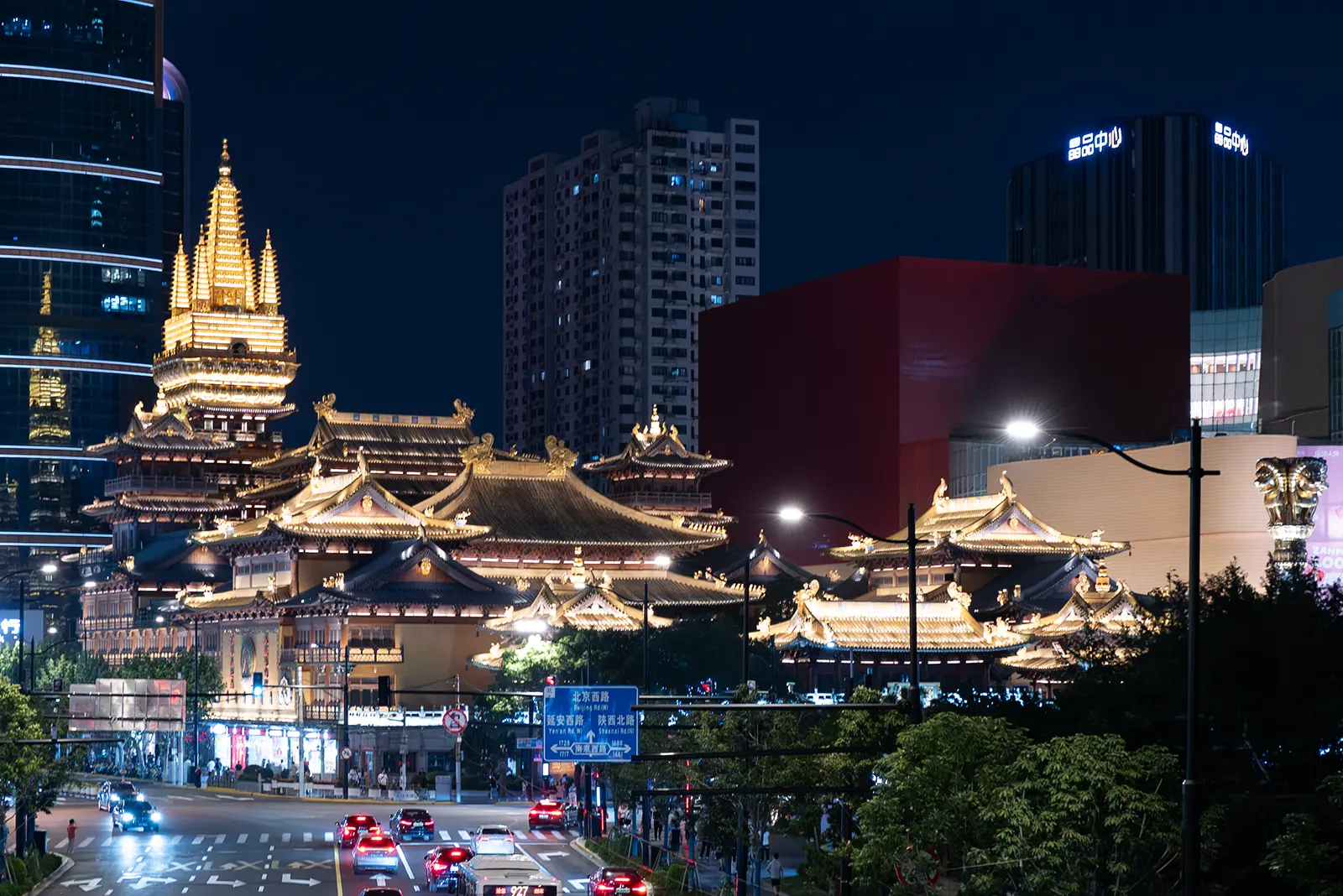
Jing’an sits west of People’s Square and north of the former French Concession — and if you’re visiting Shanghai for the first time, there’s a reasonable argument it’s the easiest place to base yourself. Everything is close, the metro is on your doorstep, and the area manages to feel both modern and genuinely interesting at the same time.
I’ve lived in Shanghai for over 20 years and Jing’an is where I usually send friends who want convenience without sacrificing atmosphere. You can spend a morning at a Buddhist temple, grab coffee on a leafy side street, explore some of the best shopping malls in the city and still be a few stops from the Bund or Pudong without breaking a sweat.
Compared to the former French Concession, Jing’an feels more polished and vertical – more glass and steel, less plane trees and lane houses. That’s not a criticism; it’s simply a different side of Shanghai, and for many visitors it’s exactly what they’re looking for. It’s also noticeably less touristy than Huangpu.
Quick Answers
Best for: First-time visitors, shopping, cafés, nightlife and convenience
Known for: Jing’an Temple, West Nanjing Road and luxury malls
Atmosphere: Modern, polished and international
Good for walking? Yes, especially around Jing’an Temple and West Nanjing Road
Expensive? Generally yes compared to outer districts
Jing’an vs Former French Concession
| Jing’an | Former French Concession |
|---|---|
| More modern | More historic |
| Luxury malls | Tree-lined streets |
| Better shopping | Better café wandering |
| More high-rise | Lower-rise atmosphere |
| Easier for first-time visitors | More neighbourhood feel |
What Is Jing’an Actually Like?
Jing’an is one of the central areas of Shanghai and one of the city’s most popular districts for expats and first-time visitors. Stretching along West Nanjing Road towards Jing’an Temple, it combines luxury shopping malls, office towers and modern hotels with smaller side streets, cafés and older residential areas.
Compared to districts like Xuhui or Huangpu, Jing’an generally feels more modern and vertical, with more skyscrapers and large commercial developments. It’s also one of the most convenient parts of Shanghai, with strong metro connections and easy access to places like the Bund, People’s Square, Nanjing Road and the former French Concession.
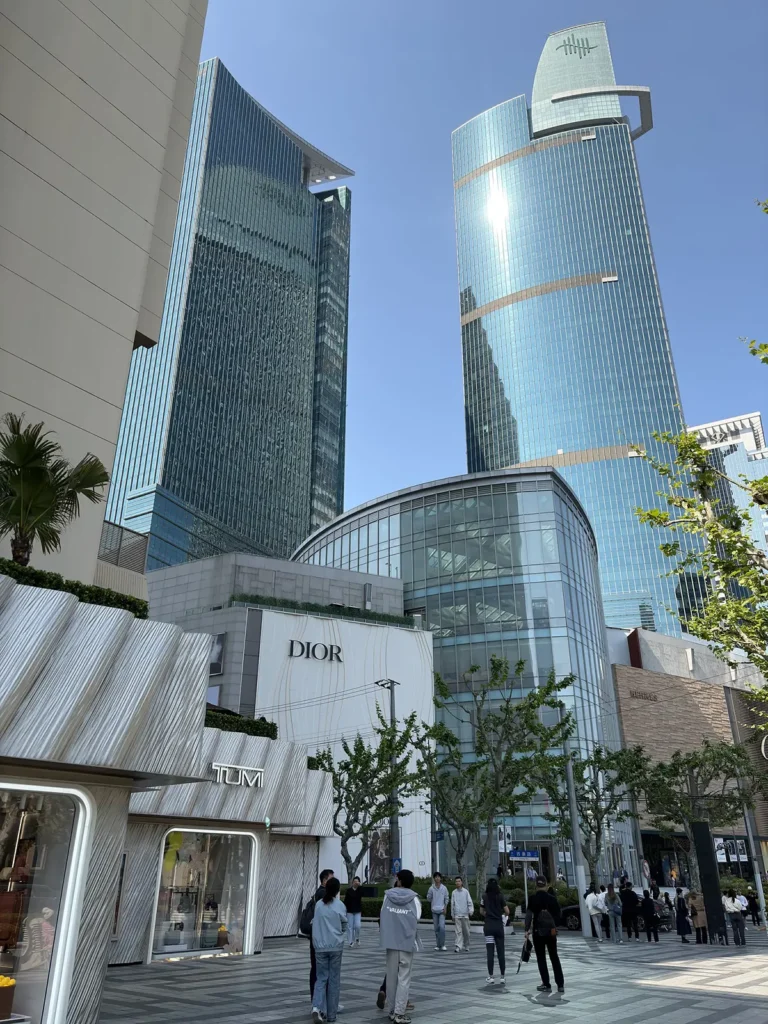
Jing’an is particularly popular with expats because of its concentration of western restaurants, bars, cafés and imported supermarkets. Areas around Jing’an Temple and West Nanjing Road are especially international in feel, with many high-end malls and modern apartment compounds nearby.
At the same time, Jing’an is not just shopping malls and office towers. You’ll still find quieter residential streets, local restaurants and smaller cafés tucked away between the larger commercial areas.
The main downside is cost. Hotels, apartments, restaurants and bars in Jing’an are usually more expensive than many other parts of Shanghai, especially around West Nanjing Road and Jing’an Temple. However, for many visitors the convenience and central location make it worth paying more.
Watch the 2-Day Shanghai Itinerary (Jing’an included)
Jing’an features on Day 2 of the itinerary, including Jing’an Temple, Nanjing West Road, Taikoo Hui, The Louis, and the Starbucks Reserve Roastery.
See how these landmarks fit together as a walkable afternoon and evening route through one of Shanghai’s most convenient districts.
Getting to Know Jing’an
Before diving in, one important note: Jing’an merged with Zhabei district in 2016 and now covers a much larger area than most visitors expect. The part north of Suzhou Creek — the former Zhabei — is a very different experience from central Jing’an, and considerably less convenient. Everything in this guide refers to the original Jing’an district south of Suzhou Creek.
Jing’an Temple & West Nanjing Road
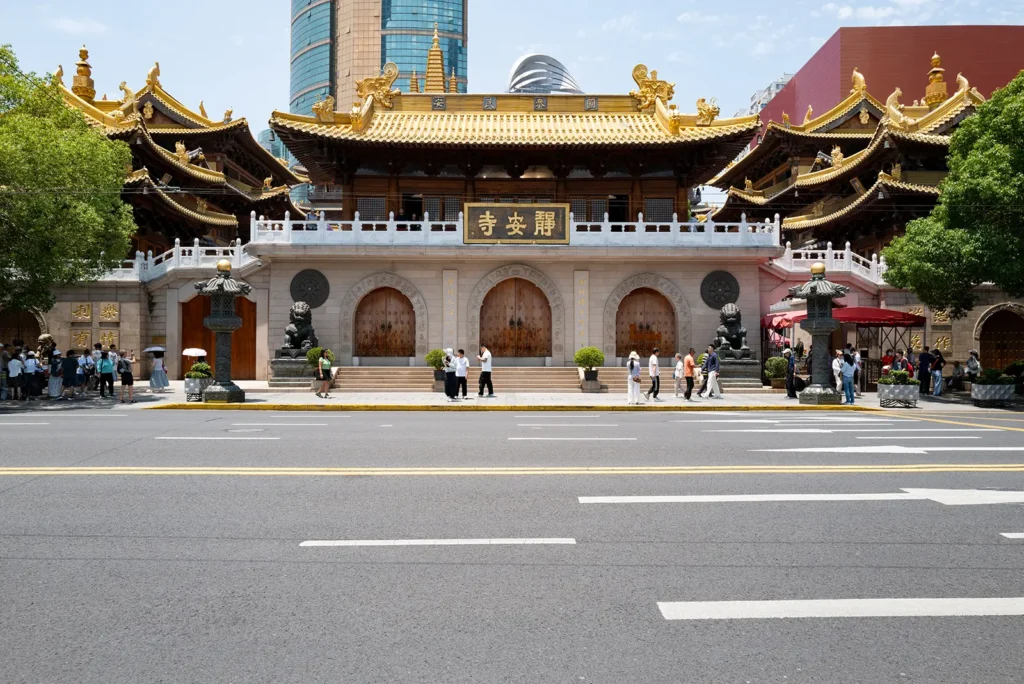
The commercial heart of the district. Jing’an Temple itself sits at the western end of Nanjing Road, surrounded by some of the best shopping malls in the city — Taikoo Hui, Kerry Centre, Plaza 66 and Reel Mall are all within easy walking distance. The area has strong metro connections (lines 2 and 7) and plenty of hotels, making it the obvious base for first-time visitors.
Wuding Road & Shangkangli
This is where Jing’an gets more interesting after dark. Shangkangli is a lifestyle complex in the Xintiandi mould — a curated collection of bars, restaurants and cafés in one compact spot. A short walk away, the area around the intersection of Jiaozhou Road and Wuding Road has a lively concentration of bars and restaurants that spills along the street towards Yanping Road.
Café Streets & Side Roads
The quieter side of Jing’an. You’ll still find cafés along the side streets — though the district is dominated more by bigger chains like Peet’s, Manner, Starbucks and % Arabica, often inside the malls rather than on independent corners. Worth a wander, but it doesn’t have quite the same street-level charm as the former French Concession.
Shopping in Jing’an
Jing’an is home to many of the most premium shopping malls in the city, including Taikoo Hui, Kerry Center, Plaza 66, Reel Mall and Jiu Guang, a Japanese department store next to Jing’an Temple.
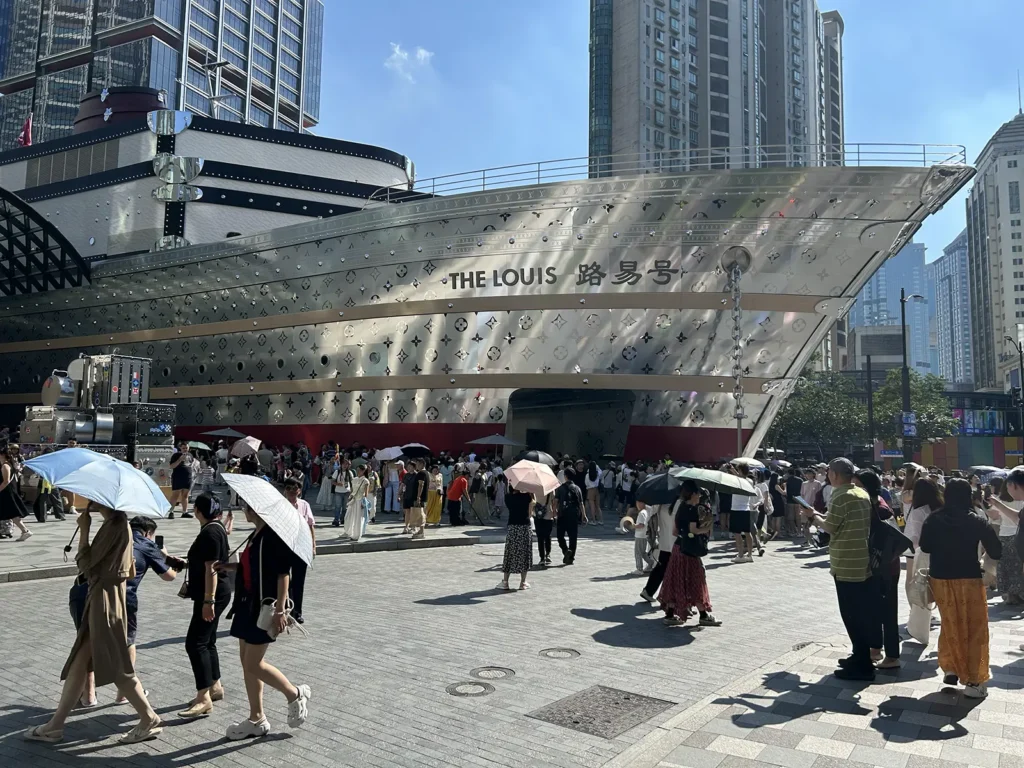
Taikoo Hui is also where you’ll find The Louis and what was once the largest Starbucks in the world, the Starbucks Reserve Roastery, both of which draw thousands of tourists every year.
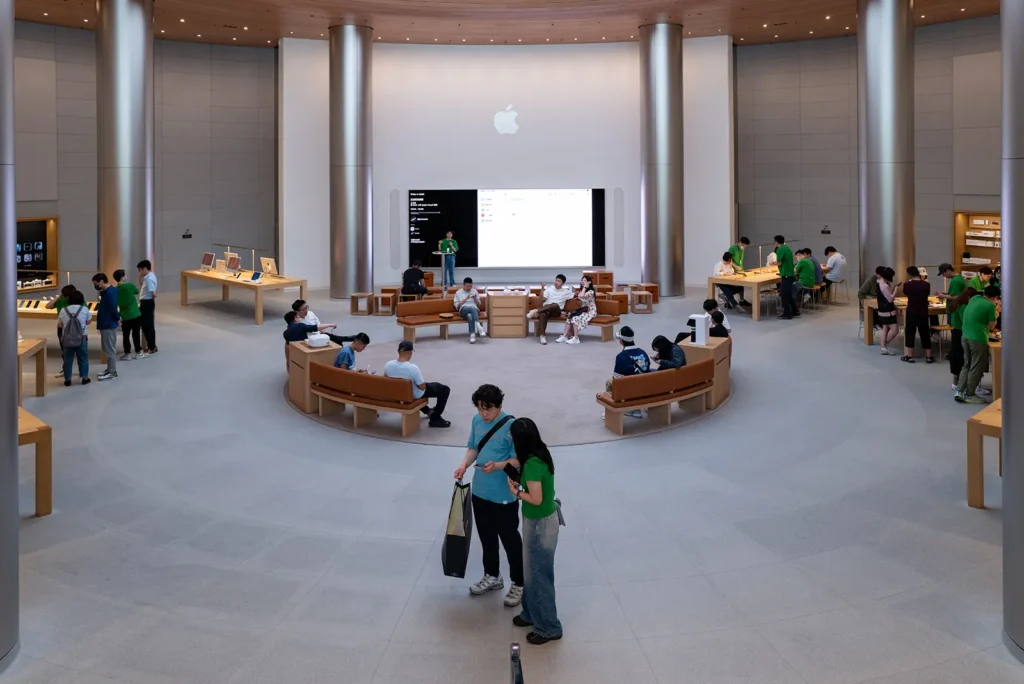
Further along from Taikoo Hui, you have Jing’an Temple, Kerry Center, Reel Mall and the largest Apple Store in Shanghai.
Food & Drink in Jing’an
Jing’an has many dining options to cater to all tastes. The restaurants are more likely to be located in shopping malls on Nanjing Road rather than an old villa, but that doesn’t impact the quality of the food. Having said that, there are pockets of areas off Nanjing Road that have good dining and drinking options like the area around Jiaozhou Road / Wuding Road.
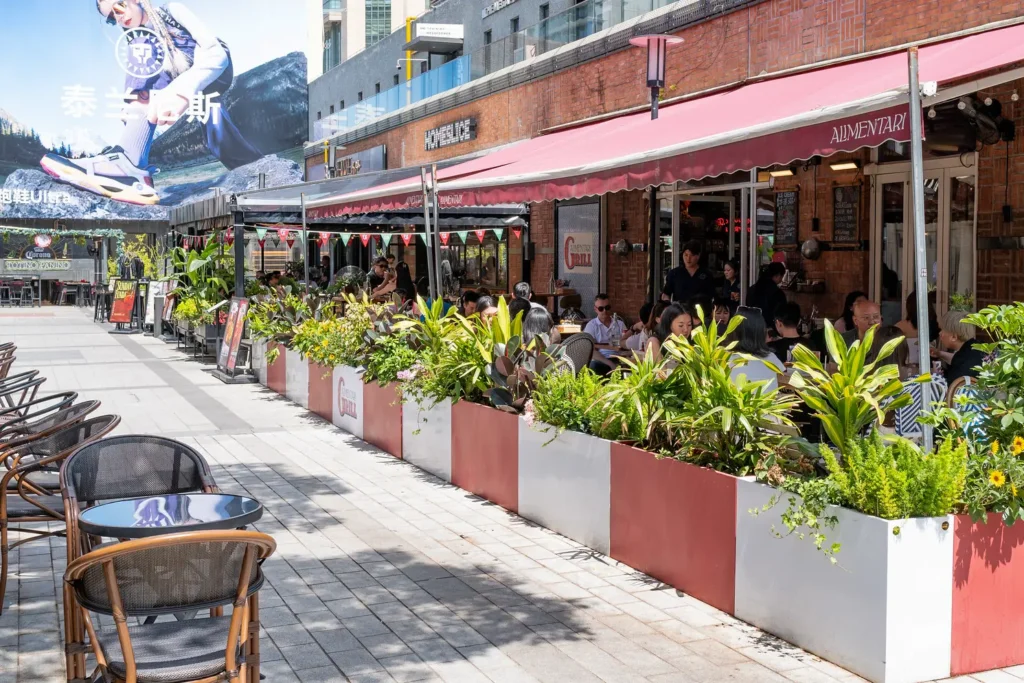
Shangkangli is an area that also has many dining options such as Homeslice Pizza, Azul Moreno, Alimentari and Totino Panino among others.
Because of the high concentration of expats living in Jing’an, it also has many of the best western restaurants and bars. Places like Terrakota, RAW, Aster by Joshua Paris, KLAY and The Cheesecake Factory to name a few.
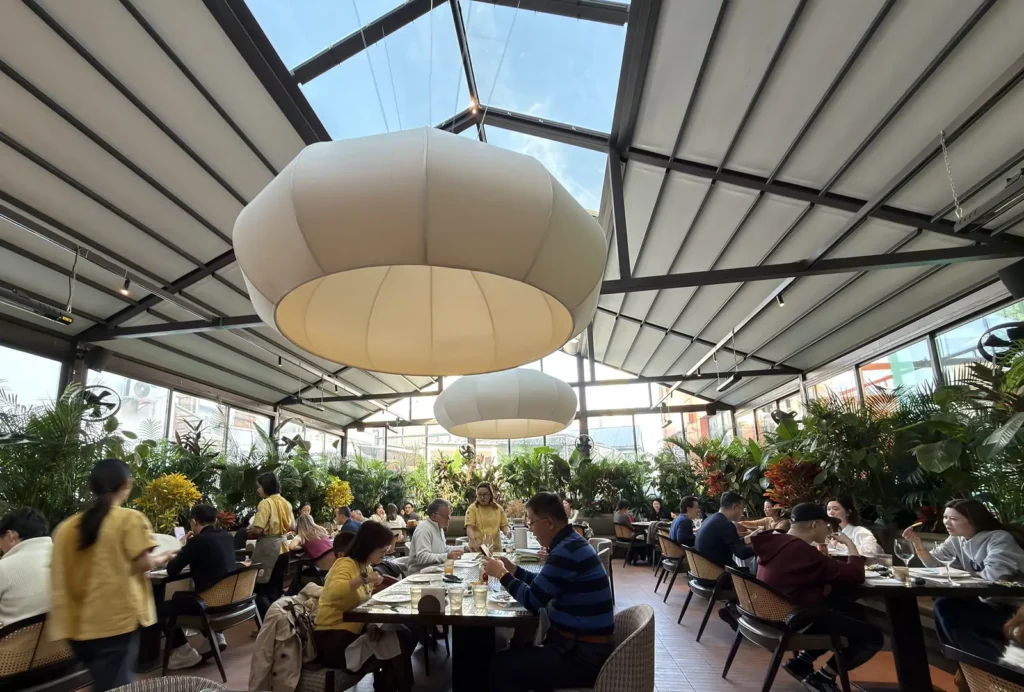
Most of the cooler cocktail bars are found in Xuhui / former French Concession, but there are still some good ones like Barules and J. Boroski. Jing’an also has plenty of drinking options beyond cocktail bars, including Cages which doubles up as a great place to watch sporting events and they also have a more than decent food menu.
For more dining options in Shanghai, check our Shanghai restaurant guide.
Where To Stay in Jing’an
Jing’an is a great place to stay if you want to avoid having to take taxis. You can step out of your hotel and into a mall in a matter of minutes or less. Taikoo Hui itself has not one but two hotels – the Upper House and the Sukhothai. You could easily spend an entire day there without leaving the complex.
Other options worth considering are the Swissotel, just a block from Jing’an Temple, just off Nanjing Road West and close to Jing’an Temple subway (line 2, 7 and 14). Taikoo Hui, Kerry Center and Reel Mall are all minutes away by foot.
Check our hotels guide for more details on where to stay in Shanghai.
Getting Around Jing’an
Jing’an Temple (line 2, line 7, line 14) and Nanjing Road West (line 2, line 12, line 13) are both close to all the action along Nanjing Road West. You can get out at Jing’an Temple and walk east as far as you like, possibly all the way to the Bund. Nanjing Road is very walkable. If coming from either of Shanghai’s two airports, line 2 brings you straight to the heart of Jing’an. You’re 25 minutes from Hongqiao airport and about 70 minutes from Pudong airport by subway.
Walking to The Bund from Jing’an Temple is just under 5km and will take about 90 minutes or longer if you are stopping to shop and take photos, but it’s an easy, leisurely walk when the weather is not too hot.
Planning the rest of your China trip?
I personally use Trip.com to compare hotels, high-speed train tickets, domestic flights, attractions and airport transfers across China, making it easy to organise your whole trip in one place.
Frequently Asked Questions
Is Jing’an good for tourists? Yes. It’s one of the easiest parts of Shanghai to navigate, with major attractions, good hotels, and excellent metro connections all concentrated in a relatively small area.
Is Jing’an walkable? Very much so. Start at either end of Nanjing Road West — Jing’an Temple or People’s Square — and walk the full length, stopping wherever takes your interest along the way.
Where’s the best place to stay in Jing’an? Stick to the area around Nanjing Road West. Jing’an district now extends far to the north following its merger with Zhabei in 2016, and hotels in that part of the district are much less conveniently located for the main attractions.
Is Jing’an expensive? Relative to other parts of Shanghai, yes. Hotels, restaurants and bars tend to be priced higher than outer districts, though you’ll still find affordable options if you look beyond the main malls.
How do I get to Jing’an? Jing’an Temple station is served by metro lines 2, 7 and 14, making it easy to reach from Pudong airport, Hongqiao airport, the Bund and most other parts of the city.
Is Jing’an good for food? Yes, particularly if you like international cuisine. The area has a high concentration of western restaurants and bars alongside good Chinese options, with Wuding Road and Shangkangli worth exploring in the evening.
How does Jing’an compare to the former French Concession? Jing’an is more modern and commercial — better for shopping malls and hotel convenience. The former French Concession has more street-level charm, independent cafés and a leafier, more residential feel. Many visitors end up spending time in both.
Explore more: Things To Do in Shanghai | Shanghai Tower | Yu Gardens | The Bund | Subway vs Taxi | Best eSIM for China | Shanghainese Food | Wet Markets