Supermarkets in Shanghai are generally cheaper than in most Western countries, especially for local groceries, though imported food can be much more expensive. You’ll find everything from large international grocery stores to smaller neighbourhood shops across the city.
Looking to save money?
See our guide to cheap supermarkets in Shanghai for simple ways to cut your grocery bill.
For a quick shortlist, see our comparison of the best supermarkets in Shanghai. For Western ingredients, see our imported food in Shanghai guide. Prefer to eat out? See our restaurant guide.
Here’s a rough guide to what groceries actually cost.
Cost of Groceries in Shanghai
Prices can vary quite a lot depending on the store, brand and level of quality, so the figures below are only intended as a rough guide. Prices taken from Hema stores, a fair indication of local supermarket prices. Imported grocery store prices will be significantly higher.
Meat & Protein:
- Chicken breast (500g): ¥11–¥13
- Tofu (350g): ¥3-¥6
- Minced beef (200g): ¥27
Fruit & Vegetables
- Apples (500g): ¥10–¥15
- Iceberg Lettuce (400g): ¥7
- Broccoli (500g): ¥5-¥10
Dairy & Extras
- Eggs (10): ¥10–¥30
- Milk (1L): ¥20–¥25
Pantry Basics:
- Local Rice (2.5kg): ¥15-¥25
- Lays Potato Chips (160g): ¥13
- Coca Cola (500m): ¥4
- Cooking oil (2L): ¥30
Imported Items:
- Imported Rice (2.5kg): ¥35
- French table wine (bottle): from ¥100
- Extra Virgin Olive Oil (500ml): ¥112
- Cheddar cheese (200g): ¥38
** Prices last checked: April 2026 **
As a general rule, everyday shopping can be very affordable if you stick mainly to local products. Costs rise quickly once you start adding more imported food, so your overall grocery bill will depend a lot on your habits and preferences.
If you’d rather eat out, see our food and drink guide for great places to eat in Shanghai.
Looking for Western ingredients?
Our imported food in Shanghai guide covers where to find cheese, olive oil, fresh herbs and other hard-to-find products.
Popular supermarket options in Shanghai
- Hema → delivery, fresh food and everyday shopping
- Aldi → affordable imported groceries
- Ole’ and City’Super → premium imported food
- Sam’s Club and Costco → bulk and warehouse shopping
- Walmart, RT-Mart and Century Lianhua → hypermarkets for a full weekly shop
- FamilyMart, 7-Eleven and Lawson → convenience stores for top-ups and essentials
- Wet markets → fresh produce, seafood and a more local shopping experience
Looking for detailed comparisons? See our full supermarket comparison guide.
Local Supermarkets In Shanghai (Chinese Chains)
If you’re looking for local supermarkets in Shanghai, neighbourhood grocery stores are widely used and often the most convenient option for everyday shopping.
Lianhua (联华超市)
One of the largest supermarket chains in China with branches across Shanghai. Good for everyday groceries and basic household items. More conveniently located for quick trips.
Hualian (华联超市)
Another widely available local chain offering similar products to Lianhua. Stores located in residential neighbourhoods for easy access.
Hema 盒马 (Freshippo)
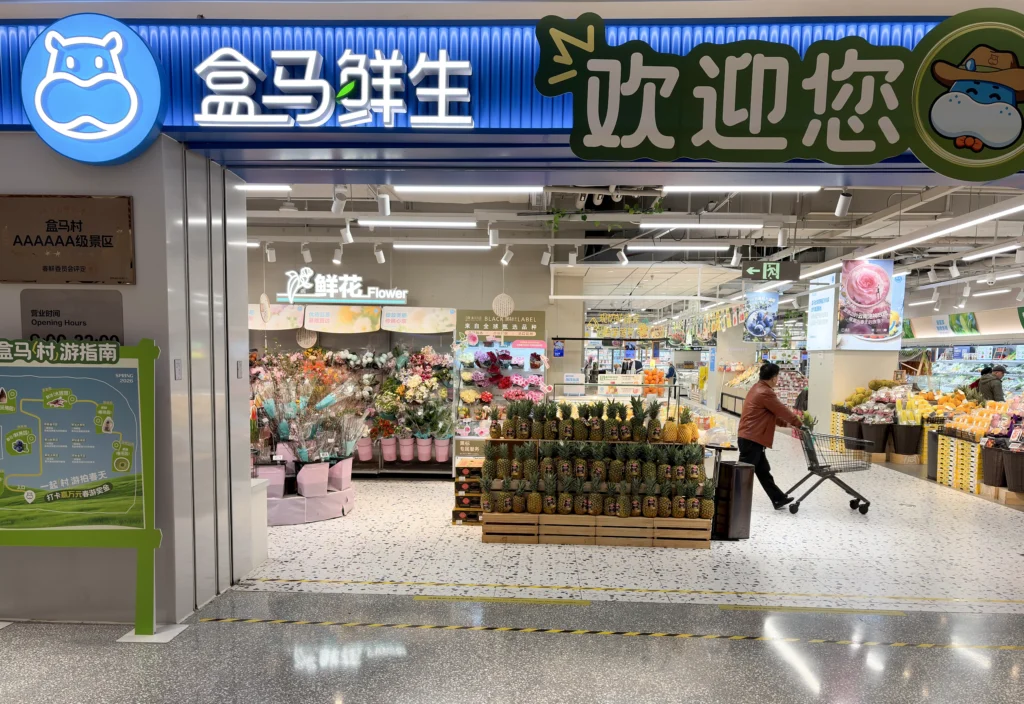
A modern supermarket owned by Alibaba with a strong focus on fresh food and app-based delivery. An impressive selection of fresh meat, vegetables and fruit as well as live seafood tanks for crabs, lobsters, shrimp and more. If you’re too busy to visit a store, they will deliver to your home, mostly within an hour or so, often faster. Members can pay an annual fee to nominate one day per week and get 12% of on that day.
For a quick comparison of the most popular options, see our guide to the top supermarkets in Shanghai.
You’ll also see dumplings everywhere in Shanghai, both fresh and frozen. If you’re buying them in supermarkets, it helps to know the different types and how they’re labelled. For a closer look, see our Shanghai dumplings guide.
Hypermarkets
Hypermarkets are essentially supermarkets on a much larger scale, typically selling groceries alongside durables such as TVs, kitchen appliances, bicycles and clothing. Unlike the neighbourhood supermarkets above, these are destination shops — fewer locations, bigger footprint, and usually requiring a deliberate trip rather than a quick stroll unless you happen to live nearby. The upside is a broader range, often lower prices on bulk items, and the fact that most hypermarkets are located in or near retail complexes with plenty of eating options, so it’s easy to combine the trip with a meal.
Watch our Century Mart hypermarket walk-through video →
Walmart 沃尔玛 The familiar American giant operates a number of large-format stores in Shanghai. Grocery range is solid and prices are competitive, with a decent selection of both local and imported products. Worth a visit if you’re in the area.
RT-Mart 大润发 One of the dominant hypermarket chains in China, RT-Mart stores are typically large, busy and well-stocked with local produce, fresh food, household goods and general merchandise. Good value and popular with local families. Mostly located on the outskirts of the city.
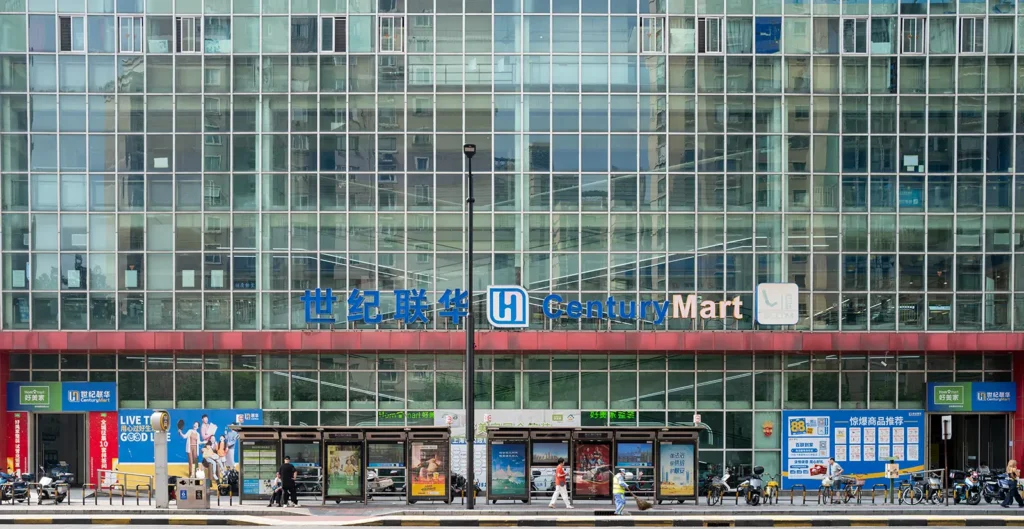
Century Mart 世纪联华 The larger-format hypermarket sibling of the Lianhua neighbourhood chain, with just a handful of locations across the city. Follows the same broad model — groceries and general merchandise under one roof — and tends to be well-stocked and good value.
Imported Grocery Stores
For most visitors, Hema or local supermarkets are enough for everyday shopping. But if you need imported cheese, wine, breakfast cereal, olive oil or baking ingredients, these are the stores most expats rely on.
Looking for a nearby supermarket?
Use our Shanghai supermarket store finder to locate: Aldi, Hema, Sam’s Club, Costco, Ole, City’Super and more.
Times Grocery (泰唔士自选超市)
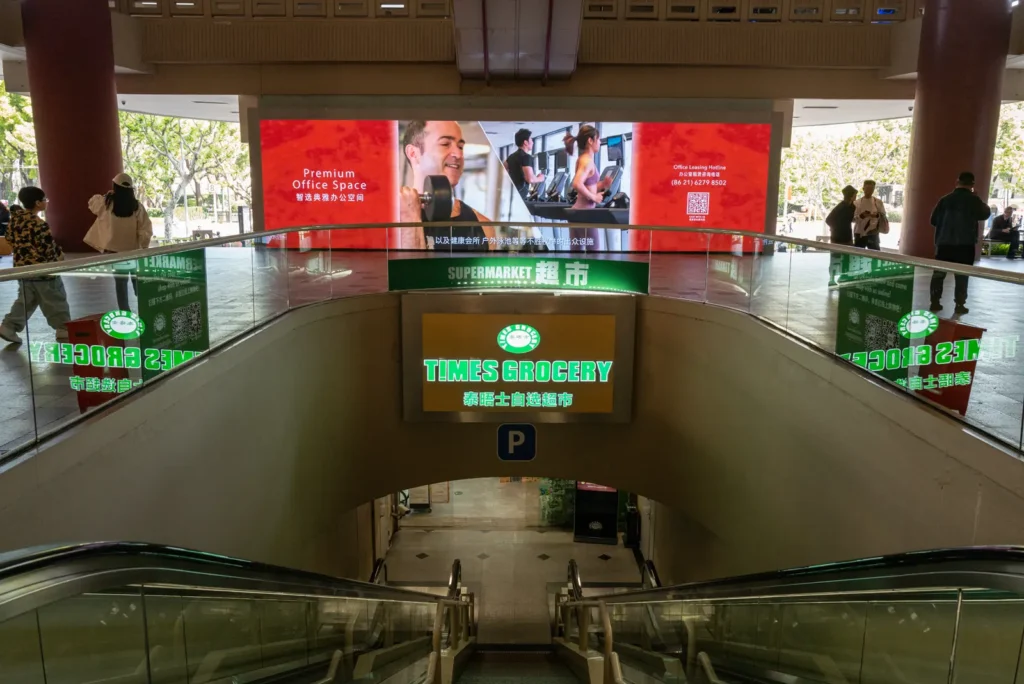
Located in the basement of Shanghai Centre on Nanjing Road, Times Grocery is a convenient central option with a solid range of imported groceries alongside everyday essentials — particularly useful for tourists and expats staying in the area.
City’Super 城市超市
One of the best-known options for imported groceries, with a strong selection of cheeses, meats and international products. Consistently good quality, though prices reflect that.
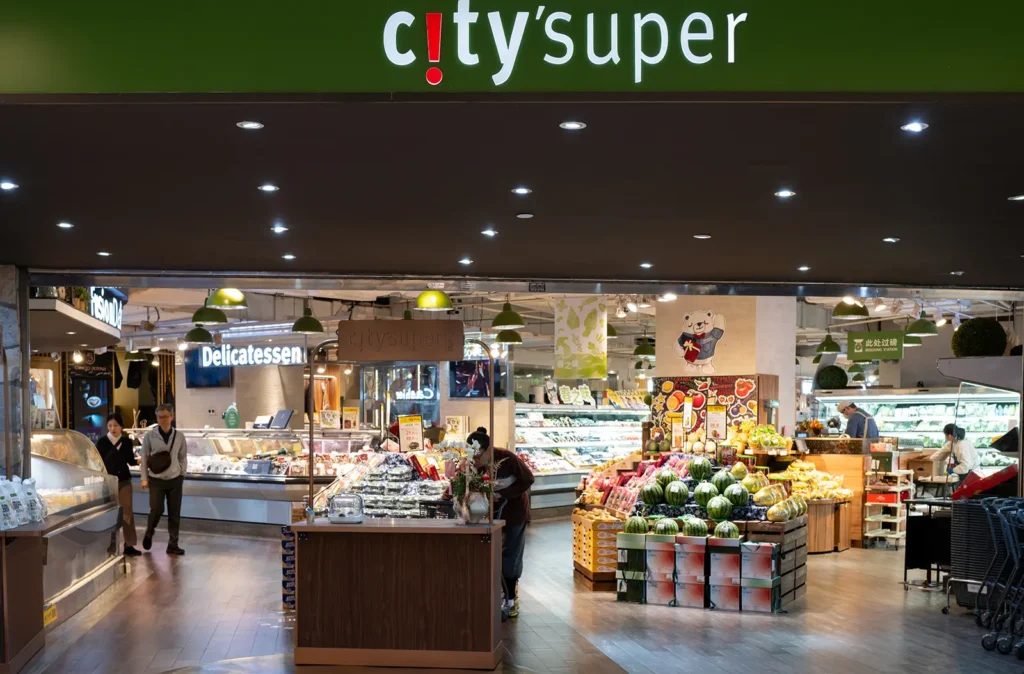
The Taikoo Hui location is particularly worth visiting as the surrounding area has a lot of other attractions.
→ Read our Taikoo Hui guide
Ole’ 精品超市
A more upscale supermarket with a mix of imported and premium local products. Well laid out and easy to shop, with a slightly broader range beyond just Western items.
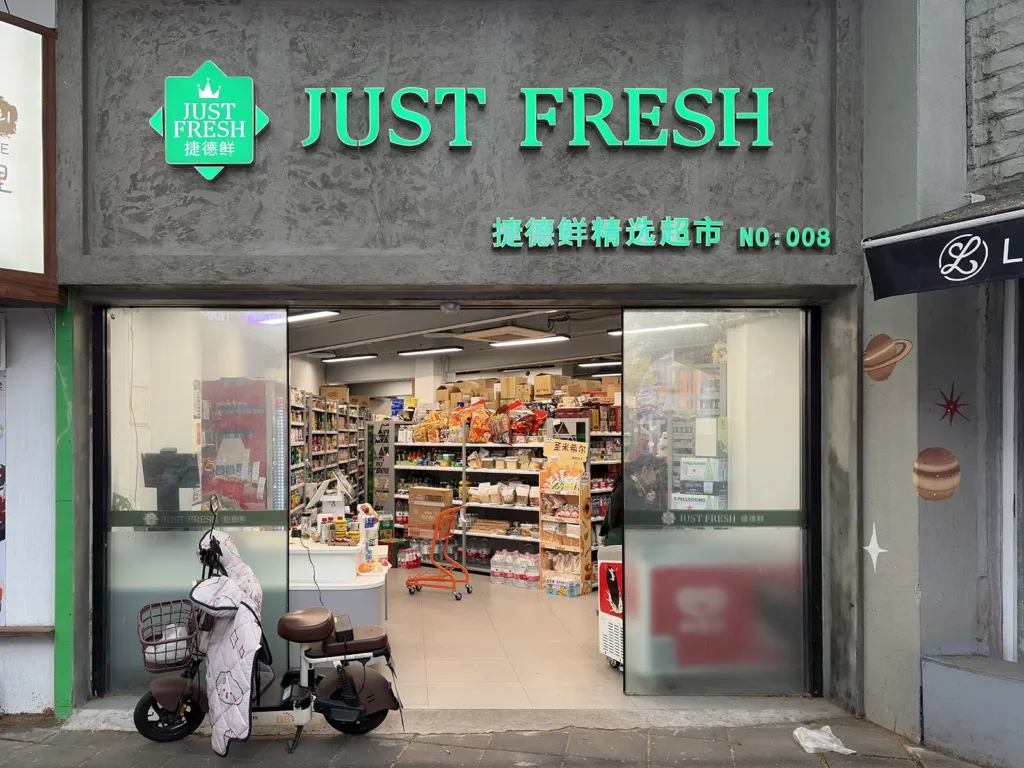
Just Fresh
Mostly smaller stores than Ole’ and City Super, and located in street-side locations rather than upscale malls. Just Fresh nevertheless offers many of the items expats need but can’t easily find in the local stores. At Just Fresh, you’ll find cheese, tomato paste, Brussels sprouts, chickpeas, Basil leaves, mint leaves and more.
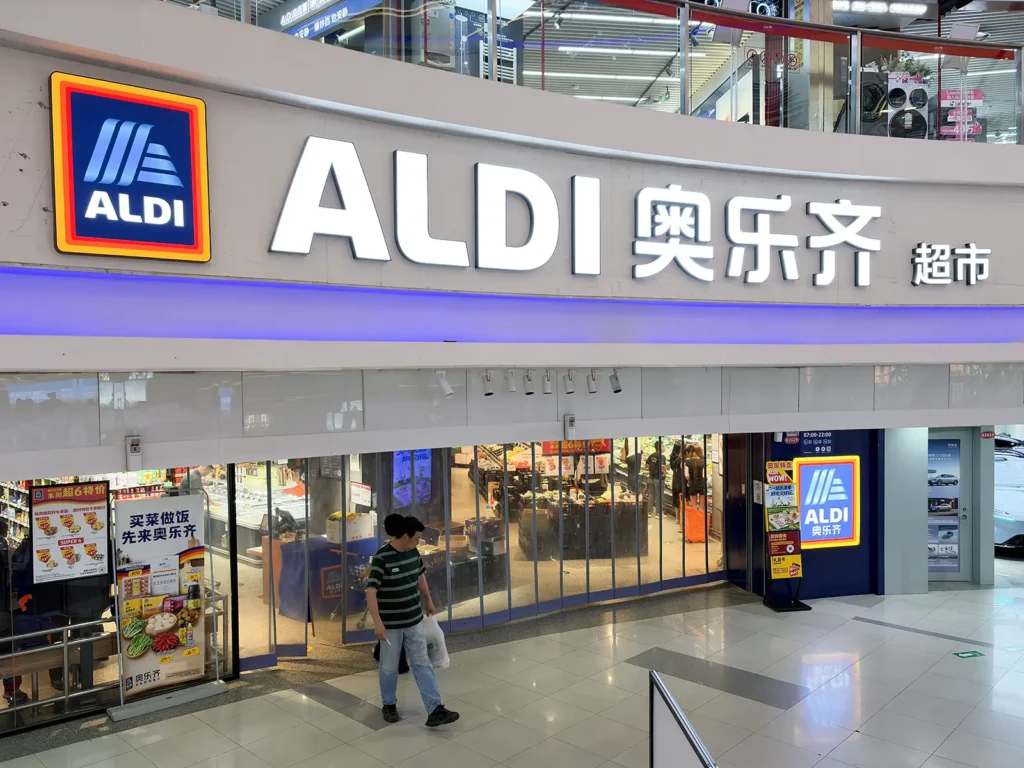
Aldi 奥乐齐
Aldi entered the Shanghai market in 2019 and has built up a solid network of stores across the city. Unlike the discount Aldi you might know from Europe or Australia, the Shanghai version pitches itself slightly upmarket, with imported products, quality fresh food and its own private-label range at prices that tend to undercut City’Super and Ole’ considerably. Their WeChat mini-program has a fully English version for ordering groceries for home delivery. One of the most practical day-to-day options for expats.
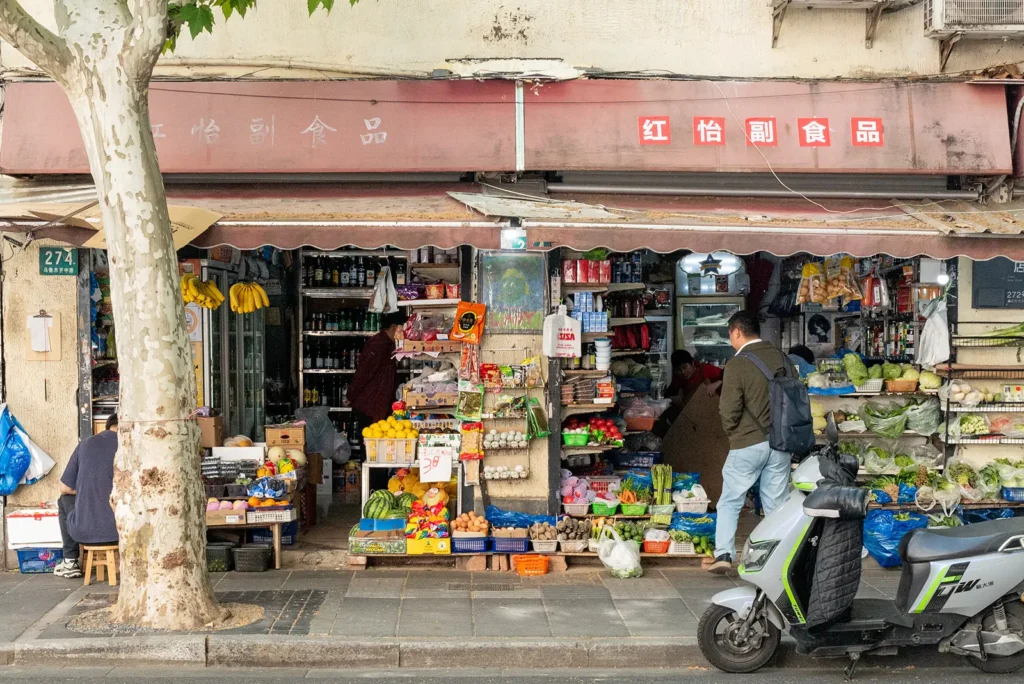
Avocado Lady
This is not the official store name, but the Avocado Lady is legendary among Shanghai expats. The tiny store in the former French Concession is packed with everything most expats would want, and if she doesn’t have what you need, let her know — chances are she’ll find it. Prices are generally lower than the bigger chains.
For a quick overview of the best options across the city, see our guide to the best supermarket options in Shanghai.
If you’re specifically looking for Western ingredients, see our guide to imported food in Shanghai.
Note: City Shop, once a well-known expat supermarket chain in Shanghai, closed all locations in April 2024. It is not related to City Super, which is still operating.
Online Grocery Delivery
Many people in Shanghai now do most of their grocery shopping online via apps. Delivery is fast, reliable and often more convenient than visiting a store in person. For a detailed overview of grocery apps and delivery services, see our guide to online grocery delivery in Shanghai.
Hema 盒马 (Delivery)
The Hema app is one of the most widely used options for grocery delivery, typically delivering within 30–60 minutes. It is only in Chinese, but most foreigners manage it with a little practice. Members get 12% off all purchases — in-store and via delivery — on one chosen day per week.
Jindong Dao Jia 京东到家
Also an online supermarket retailer, though slightly less popular than Hema.
Eleme 饿了么
Primarily a food delivery plaform similar to Uber Eats or Deliveroo. However, they also work with smaller supermarkets for more essential items that you might want in a hurry.
Taobao 淘宝
This is not an O2O platform and is more similar to Amazon, so delivery is usually not same day and can take up to several days as some sellers may not be in the same city or province. However, for non-perishable (and less urgent) items, such as olive oil or shower gel, Taobao can be a good option.
Want to compare delivery apps, fees and delivery speeds? See our Shanghai grocery apps guide.
Epermarket
Epermarket is an online supermarket with an English-language website, making it one of the most foreigner-friendly options for ordering imported groceries. For more places to buy Western products, see our imported food in Shanghai guide.
Many of these apps require a Chinese phone number or mobile data connection. If you’re visiting Shanghai and need internet access, see our guide to eSIMs for China.
Wet Markets
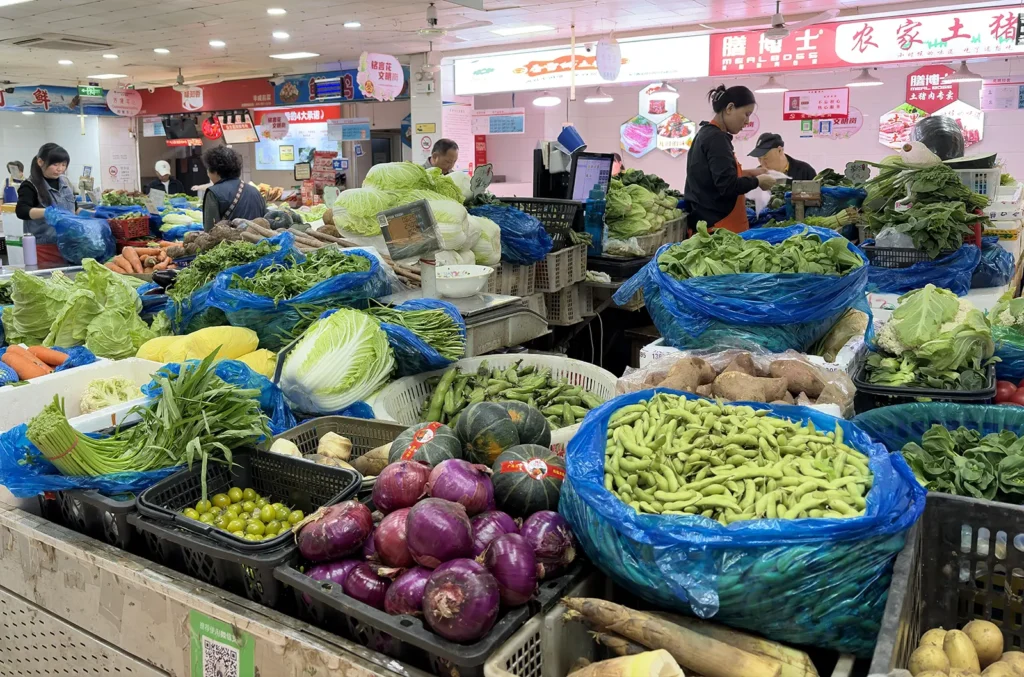
Wet markets remain one of the most interesting parts of grocery shopping in Shanghai and offer a very different experience from modern supermarkets.
For fresh produce and a more local experience, wet markets are still widely used across the city. These are open-style markets where you can buy vegetables, meat and seafood, often at lower prices than supermarkets and in smaller quantities. Quality is usually very good, though the environment is more basic and the smell can be unpleasant.
Want the full wet market experience?
Our wet markets in Shanghai guide tells you what to expect, what to buy and where to find them.
Warehouse Stores
Warehouse clubs are another option for grocery shopping in Shanghai, particularly if you are buying in larger quantities. These membership-based stores sell many items in bulk and often carry a good range of imported products. Prices can be competitive for certain items, though the large pack sizes mean they are usually best suited to families or people stocking up on non-perishable goods.
Sam’s Club 山姆会员商店
Sam’s Club is Walmart’s membership warehouse brand and has become one of the most popular warehouse-style supermarkets in Shanghai, offering a wide range of groceries, household products and imported foods. Many shoppers visit specifically for its selection of Western products, including cheeses, frozen foods and snacks that can be difficult to find elsewhere. Membership costs around ¥260 per year.
Costco 开市客
Costco opened its first Shanghai warehouse in 2019 and now has two stores in the city. It operates on a membership basis and sells groceries, imported products and household items in bulk — popular for Kirkland-branded goods and the international food selection. Membership is around ¥300 per year.
Metro 麦德龙 Metro operates on a cash-and-carry model originally aimed at businesses and catering trade, though individual shoppers can obtain a membership card without much difficulty. The range leans heavily towards food service quantities — large pack sizes, a strong fresh and chilled section, and a good selection of imported products. Less glamorous than Sam’s or Costco but worth knowing about, particularly for bulk non-perishables and specialty ingredients.
Settling into Shanghai life?
Our Living in Shanghai guide covers everything from apps and payments to everyday practicalities for expats and long-term residents.
Convenience Stores
At the other end of the scale are convenience stores — small, everywhere, and open around the clock. Shanghai has a dense network of chains including FamilyMart 全家, 7-Eleven and Lawson 罗森, with branches on almost every main street and inside most metro stations.
The trade-off is exactly what you’d expect: a limited range of essentials, smaller pack sizes, no fresh produce, and prices noticeably higher than supermarkets. They are best treated as they are in most cities — useful for a drink, a snack, a ready meal or something you’ve run out of at 11pm, rather than a weekly shop.
In Chinese, convenience stores are sometimes also referred to as 超市 (chāoshì), the same word used for supermarkets, which can cause mild confusion if you’re searching by name or asking for directions.
Finding a Supermarket Near You
Most supermarkets in Shanghai have multiple branches rather than one central location.
- Use Dianping or Apple/Google Maps to search nearby
- Search the Chinese name if possible for better results
- Hema is easiest to locate via its own app (or just get them to deliver)
You can also find store locations using our store finder.
If you are specifically looking for international products, see our guide to imported food in Shanghai.
The form you have selected does not exist.
Explore more
Best Supermarkets | Imported Food | Online Grocery Delivery | Cheap Supermarkets | Hypermarkets