Yunnan cuisine is having a moment in Shanghai. It has always had a loyal following among locals and long-term residents, but something has shifted recently. The restaurants are fuller, the interest is higher, and for anyone arriving in Shanghai for the first time — particularly among the wave of new visitors taking advantage of China’s relaxed visa policies — it’s becoming one of the first Chinese regional cuisines worth seeking out.
This isn’t a coincidence. Shanghai is seeing more international visitors than it has in years, with many travellers rerouting from the Middle East or reassessing trips to the United States. The city is benefiting, and so are its restaurants. Yunnan, with its bold flavours, unusual ingredients and foreigner-friendly cooking style, sits right at the intersection of accessible and genuinely exciting.
If you’d rather try some other types of cuisine in Shanghai, we have a full guide to all that’s on offer.
What Is Yunnan Cuisine?
Yunnan is a province in southwest China, bordering Myanmar, Laos and Vietnam. It’s one of China’s most biodiverse regions, and that diversity shows up on the plate. The food is distinctive — less oily than many northern Chinese styles, more aromatic, and with a freshness that comes from an abundance of herbs, particularly mint, which appears in dishes in a way that will surprise anyone expecting a more conventional Chinese meal.
Chilli is present but not overwhelming. Flavours tend to be bright and layered rather than heavy. Ingredients you won’t often see elsewhere in Chinese cooking — specific mushrooms, wild greens, particular cuts of meat — appear regularly. It’s a cuisine that rewards curiosity.
For foreigners in Shanghai, it’s also one of the easier regional Chinese cuisines to navigate. There’s enough variety to suit most tastes, and the dishes tend to be visually striking and easy to share.
Lost Heaven: The Shanghai Institution
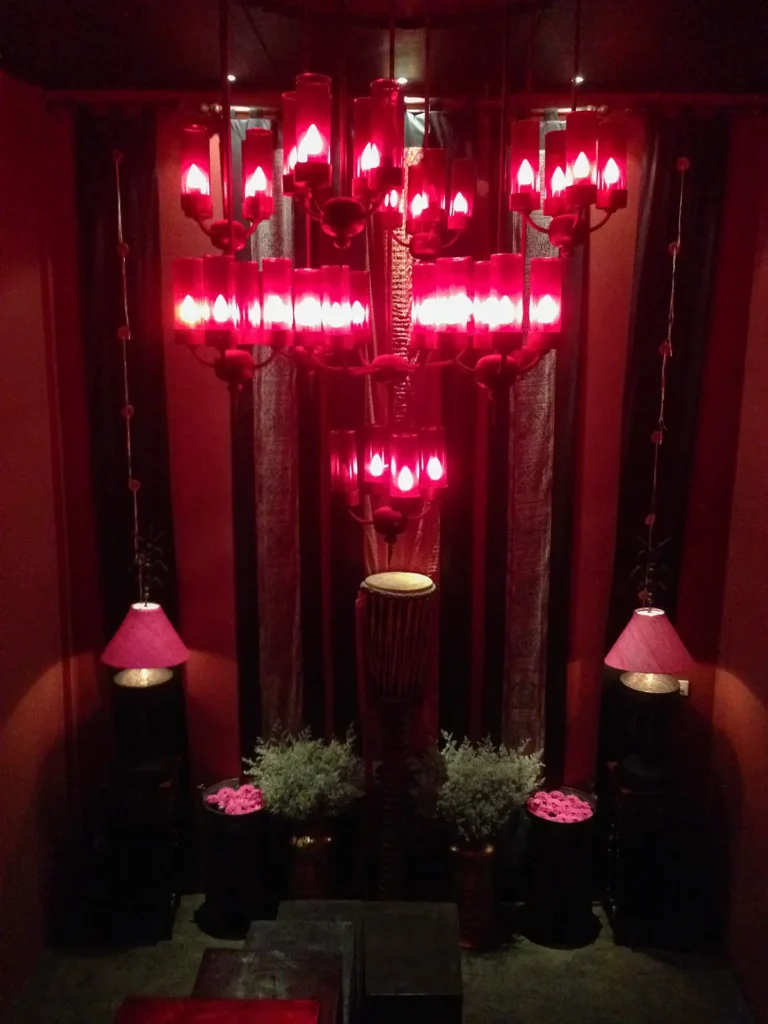
Lost Heaven has been serving Yunnan food in Shanghai for over two decades. I celebrated my birthday there in 2014 — which tells you something about how long it has been part of the fabric of the city’s dining scene, and how consistently good it has remained.
The restaurant occupies a grand space on the Bund. Walking in for the first time is something of an event in itself — a sprawling dining hall of dark wood panels and bright red lanterns, dramatic enough to set the mood before you’ve ordered anything. It’s the kind of place that impresses a table of guests, which is exactly why it works so well for groups.
I bumped into the owner earlier this week and was surprised to learn just how busy they have been — busier than expected, he said, even after consolidating to a single venue and closing a smaller location. Lost Heaven is clearly benefiting from the surge in visitors coming to Shanghai, and it shows no signs of slowing down.
Pricing sits in the mid to high range, which is fair for a prime Bund location of this quality. It is not a place for a quick Tuesday night dinner, but for a group meal or a special occasion, it delivers comfortably.
What to Order at Lost Heaven
Dali Style Chicken (大理风味葱椒鸡) ¥86 — The crowd pleaser and the dish I’d recommend to anyone uncertain about spice. Grilled chicken buried under a generous pile of spring onions, Sichuan pepper and chilli, it’s fragrant and flavourful rather than aggressively hot. One of the most popular dishes on the menu for good reason.
Yunnan Vegetable Cakes (云南野菜饼) ¥58 — Crispy herb flatbreads served with a chilli dipping sauce. Visually striking and a good way to start the meal. The number one rated dish on Dianping.
Burmese Spicy Shrimp (蓝凤凰酸辣虾) ¥188 — A nod to the cross-border influences that define Yunnan cooking. Bold, sour and spicy, this is the dish that tells you exactly where the cuisine is coming from geographically.
Mt Ka-La Grilled Pork (卡拉山火塘烧肉) ¥98 — Fire-cooked pork from the Ka-La mountain area, served with dipping sauce. Rich and smoky, another reliable order for the table.
Thai Zeed (cocktail) — If you’re having drinks, order this. Rum, vodka, chilli and lime — the heat from the chilli makes it a cocktail worth paying attention to. A good match for the food.
Lost Heaven is best experienced with a larger group — six or more lets you cover the menu properly and share across the different regional styles on offer. Booking in advance is recommended.
In & Out (一座一忘): The Newer Arrival
If Lost Heaven is the classic introduction, In & Out (一座一忘) is where you go once you’re past the tourist trail. It’s a newer chain that has quickly built a strong following among Shanghai’s foreign residents and local crowd, and it’s easy to see why.
The cooking is confident and uncompromising. The dishes feel closer to what you’d find in Yunnan itself — less adapted for international palates, more honest to the original. The setting is warm and casual, the kind of place that fills up quickly on a weeknight without any fanfare.
I visited recently and ordered widely. Everything was good. Some dishes were better than good.
What to Order at In & Out
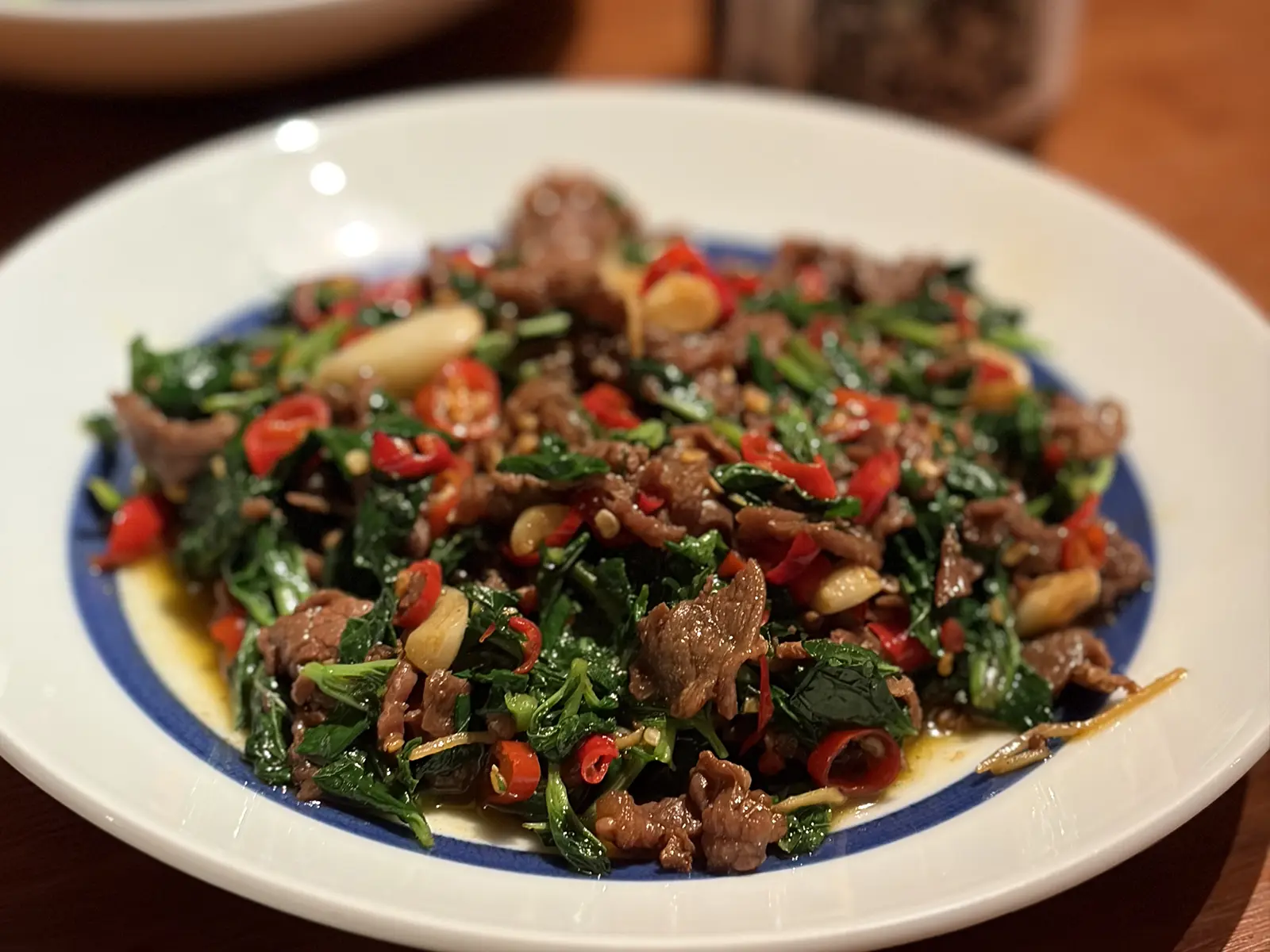
Beef with Mint — This is the dish to order. Thinly sliced beef stir-fried with an almost reckless amount of fresh mint, chilli and garlic. It sounds unusual and it is unusual, but in the best possible way. The mint doesn’t play a supporting role here — it’s central, and the combination with the beef is one of those things that makes you reconsider what you thought you knew about Chinese cooking.
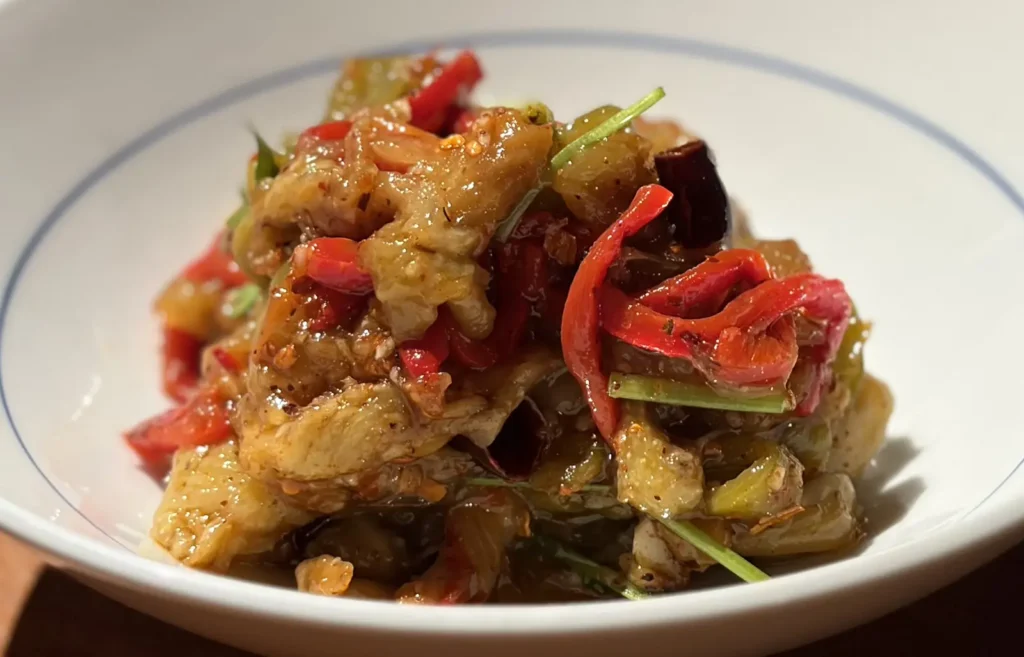
Baked Eggplant with Peppers — Soft, smoky eggplant with red and green peppers in a savoury sauce. Simple, but the kind of dish that disappears quickly.
TaiAn Potatoes with Pickles — Don’t overlook this. The potatoes are a specific Yunnan variety — waxy and translucent after cooking, unlike anything you’d expect from a potato dish. Cooked with pickled vegetables and chilli, it’s one of those side dishes that keeps drawing you back across the table.
Scrambled Eggs with Jasmine Buds — A dish that sounds unremarkable and tastes excellent. The eggs are soft and richly coloured, with fresh jasmine buds adding a light floral note and a gentle bite. Subtle, fragrant, and a nice contrast to the chilli heat elsewhere in the meal.
Spicy Prawns — Whole prawns cooked with chilli, spring onion and aromatics. Bold and messy in the best way.
Midu Pickled Chinese Cabbage Noodles — A Yunnan-style cold noodle dish built around mǐdù (Midu) pickled Chinese cabbage. The rice noodles are served cool and lightly dressed, with a clean, tangy kick from the fermented greens rather than heavy spice. It’s refreshing, slightly sour, and very moreish, especially in warmer weather.
Grilled Chicken — Glazed, slightly charred, served with a chilli dipping sauce and lime. A good order for the table alongside the more strongly flavoured dishes.
In & Out Locations in Shanghai
- Huangpu — Near Xintiandi
- Former French Concession / Changning — Just off Huashan Road
- Xuhui — Donghu Road (new opening coming soon)
They also have locations in Beijing and Guangzhou.
Yunnan Food in Shanghai: What to Know Before You Go
It’s good for groups — Both Lost Heaven and In & Out are best experienced with several people, which allows you to cover more of the menu. That said, In & Out is comfortable enough as a solo diner or a pair.
It’s not the spiciest Chinese cuisine — If you’re heat-averse, Yunnan food is manageable. If you love chilli, you’ll find plenty of it. The heat tends to be present but not dominating.
Mint is a recurring theme — If you’re not expecting it, the mint can catch you off guard. Lean into it. The beef with mint dish in particular is worth trying even if it sounds strange.
Mushrooms matter — Yunnan is famous for its wild mushrooms. Both restaurants feature them seasonally. If you see something on the menu you don’t recognise, it’s probably a Yunnan mushroom variety and worth trying.
Crossing the Bridge Noodles — This is the most famous Yunnan dish internationally, a hot broth served with raw ingredients you cook at the table. Worth trying at least once for the experience.
A Cuisine Worth Knowing
Yunnan food deserves more attention than it gets from first-time visitors to Shanghai. It sits apart from the more familiar Chinese regional styles — lighter than Sichuan, more herb-forward than Cantonese, and with a distinctive character that reflects where it comes from.
If you’re in Shanghai for more than a few days, it belongs on your list. Start with In & Out for a more local, resident-approved experience, and keep Lost Heaven in mind for when you have a group to feed and want somewhere that will impress.
For more restaurant ideas, see the Where to Eat in Shanghai guide.